

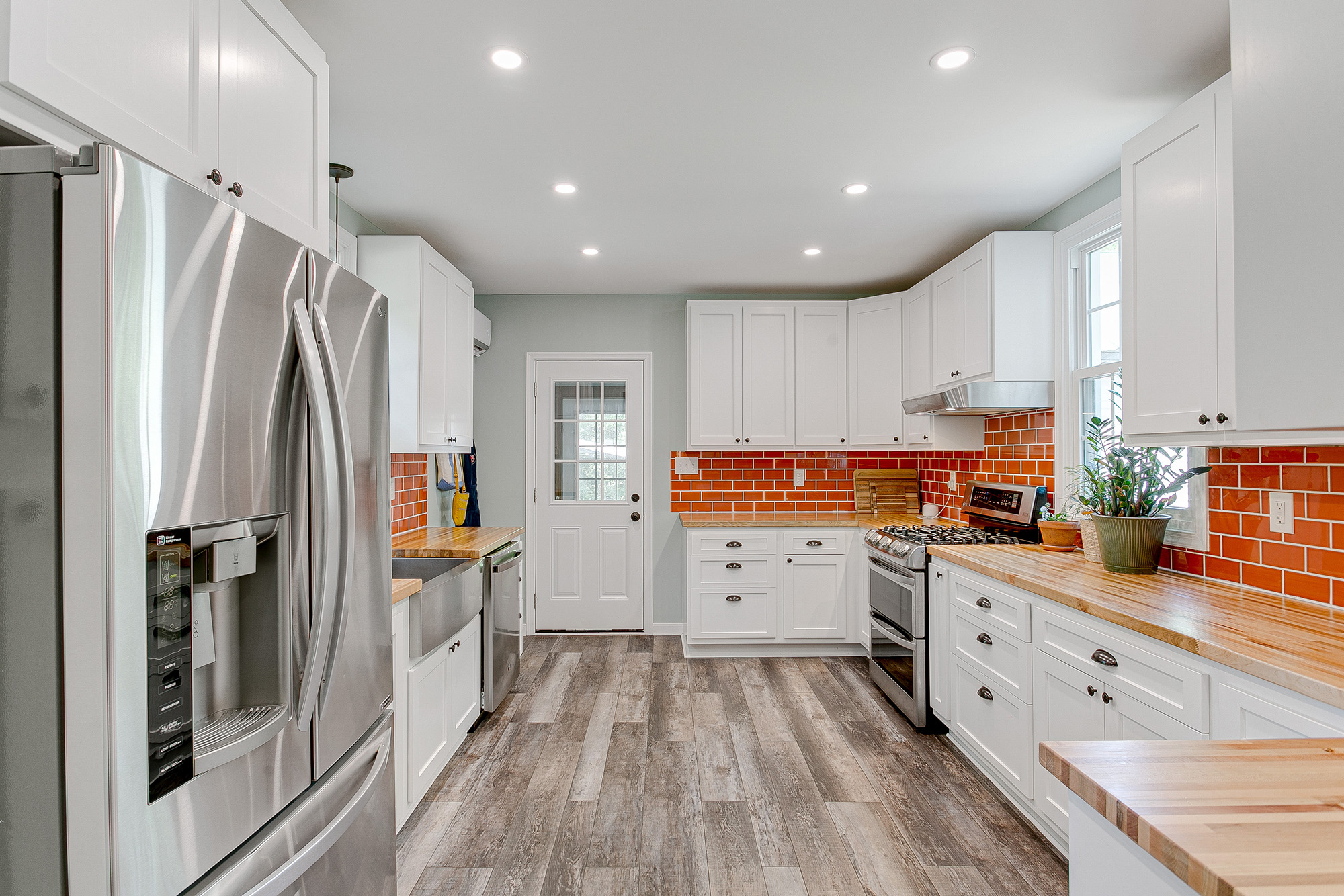
Vinyl flooring failures don’t usually happen overnight. They show up slowly — seams separating, planks curling, dips becoming visible, and outlines of the subfloor “printing through” the surface. At Rich's Carpet One, with showrooms at Hamilton, NJ, we frequently replace vinyl floors that failed not because of installation errors, but because the product itself wasn’t engineered to handle real conditions.
The difference between cheap vinyl and quality luxury vinyl plank (LVP) comes down to core stability, thickness, locking strength, and tolerance to environmental movement.
1. Thin, Flexible Cores Are the Root Cause
Low-cost vinyl typically uses thin, flexible PVC cores. These materials expand and contract dramatically with temperature changes. In homes with sunlight exposure, seasonal HVAC shifts, or basements with moisture fluctuations, this movement causes planks to warp, cup, or separate.
Quality LVP uses rigid composite cores designed to remain dimensionally stable, even when temperatures fluctuate. This stability is critical in New Jersey homes where seasonal expansion and contraction are unavoidable.
2. Subfloor Telegraphed Lines Explained
Telegraphing occurs when imperfections in the subfloor — seams, nail heads, minor height differences — become visible through the finished floor. Cheap vinyl lacks sufficient thickness and density to bridge these imperfections, allowing the subfloor profile to show through over time.
Premium LVP is engineered with greater plank thickness and density, distributing pressure evenly and masking minor subfloor inconsistencies. This doesn’t eliminate the need for proper subfloor prep, but it dramatically reduces long-term visual failure.
3. Locking Systems That Actually Hold
Inferior click-lock systems loosen under movement, allowing planks to shift. Once this happens, stress concentrates at the joints, leading to edge curl and separation.
High-quality LVP uses precision-milled locking mechanisms designed to resist lateral movement. These systems maintain tight seams, even under heavy foot traffic and rolling loads.
4. Expansion Tolerance Without Buckling
Cheap vinyl has limited expansion tolerance, meaning it reacts aggressively to heat. This leads to buckling when expansion gaps are insufficient — even if installed correctly.
Better LVP is engineered with controlled expansion properties, allowing it to flex safely within its design limits without warping or lifting.
5. Wear Layer Isn’t Just About Scratches
Thin wear layers allow micro-abrasions to form, weakening the plank surface and accelerating deformation. Premium LVP uses thicker, reinforced wear layers that protect the structural integrity of the plank, not just its appearance.
6. Long-Term Cost Reality
Cheap vinyl often needs replacement within 3–5 years due to warping or telegraphing. Quality LVP is designed for decade-long performance, making it the more cost-effective option over time.
At Rich's Carpet One, we help homeowners avoid costly flooring failures by matching the right LVP to the right environment. Visit our showroom or call today to explore vinyl floors built to perform in real New Jersey homes. We proudly serve Hamilton, Evesham Township, Tinton Falls, Edison, Toms River, Hamilton Township, Mount Laurel Township, Long Branch, and New Brunswick, NJ and Bensalem Township, PA.


