

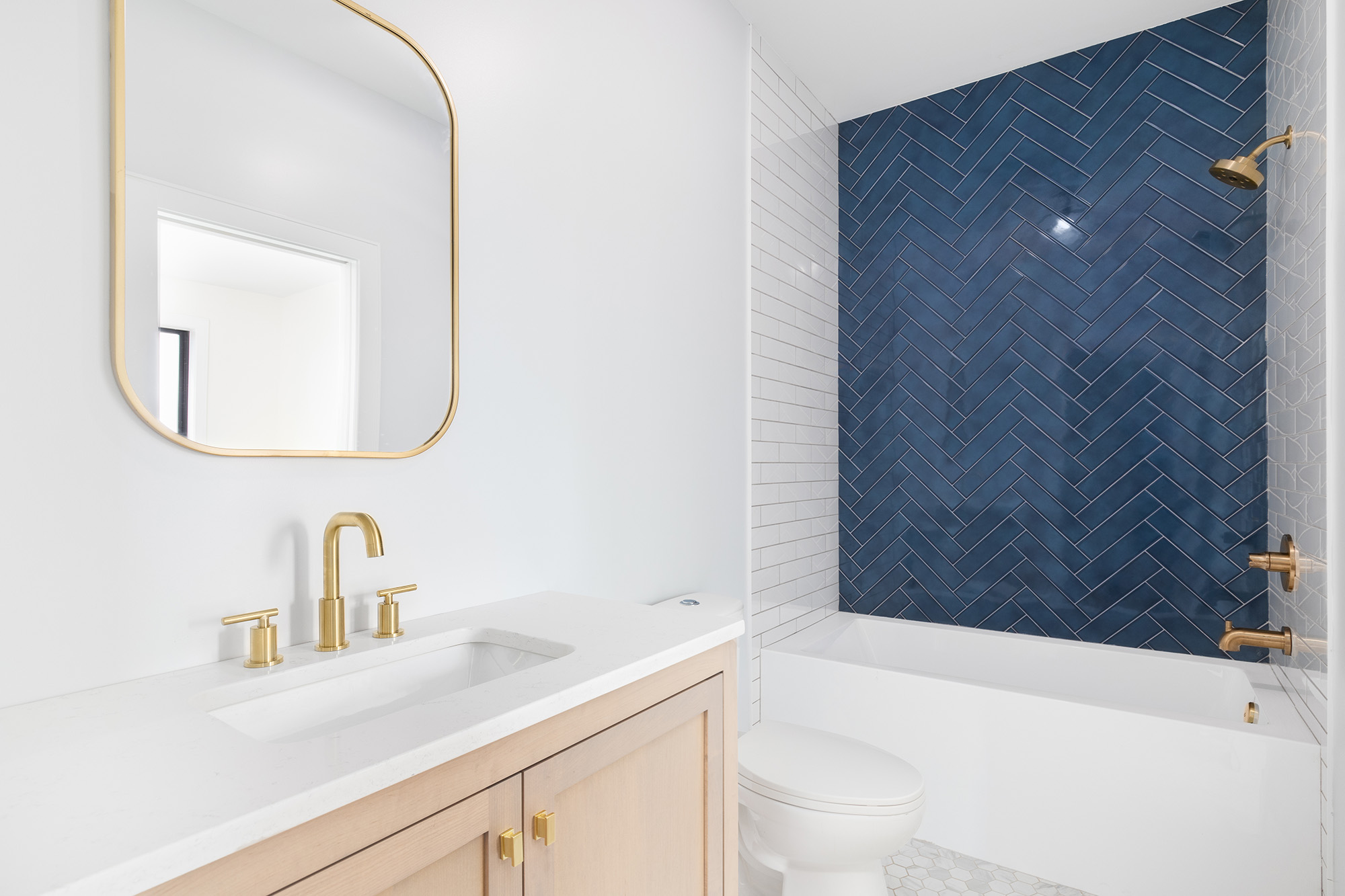
Bathrooms are the most moisture-stressed rooms in any home. At Rich's Carpet One’s showroom in Hamilton, NJ, many homeowners assume tile is the safest option—but modern luxury vinyl plank (LVP) has changed the equation. The real comparison isn’t about “waterproof” labels—it’s about how moisture actually behaves in bathrooms.
Surface Waterproof vs System Waterproof
Tile itself is waterproof—but the system is not. Grout lines, mortar beds, and subfloors remain vulnerable. LVP, by contrast, creates a floating waterproof surface, but relies on perimeter expansion gaps.
Moisture failures usually come from:
Standing water
Vapor migration
Poor ventilation
Subfloor saturation
How Tile Fails in Bathrooms
Common tile failures include:
Cracked grout from subfloor movement
Moisture wicking through cement backer board
Mold growth beneath tiles
Cold surface temperature causing condensation
Tile requires:
Waterproof membranes
Rigid subfloors
Regrouting every 3–5 years
How LVP Handles Bathroom Moisture
SPC-based LVP does not absorb water and will not swell. However:
Water can migrate beneath floating floors
Improper perimeter sealing causes edge lift
Drop-lock joints are vulnerable in bathrooms
Best practices include:
Click-lock SPC vinyl
Silicone-sealed expansion gaps
Flush-mount transitions
Proper exhaust ventilation
Comfort and Safety Comparison
Tile remains cold and hard—especially in NJ winters. LVP offers:
Warmer surface temperature
Better slip resistance (COF ratings above 0.6)
Quieter acoustics
Radiant heat works with both, but tile transmits heat faster.
Long-Term Maintenance Reality
Tile maintenance is chemical-heavy and ongoing.
LVP maintenance is neutral-cleaner based and joint-free.
Tile excels in:
Luxury primary baths
High-end resale appeal
LVP excels in:
Secondary baths
Powder rooms
Kids’ and guest bathrooms
Cost and Downtime
Tile installation:
3–5 days
Higher labor cost
Structural prep required
LVP installation:
1–2 days
Minimal subfloor modification
Easier future access
The moisture truth is nuanced: tile resists water at the surface, while LVP resists water at the material level. The right choice depends on usage, ventilation, and installation quality. Visit or contact Rich's Carpet One to evaluate bathroom flooring options suited to homes throughout Hamilton, Evesham Township, Tinton Falls, Edison, Toms River, Hamilton Township, Mount Laurel Township, Long Branch, and New Brunswick, NJ and Bensalem Township, PA.


